For generations, we've been handed a remarkably consistent picture of what professional life is supposed to look like.
Wake up.
Commute.
Clock in.
Work.
Clock out.
Repeat.
But work is changing. Technology is changing. And perhaps our definition of where opportunity lives should change with it.
What if the community became part of the workplace?
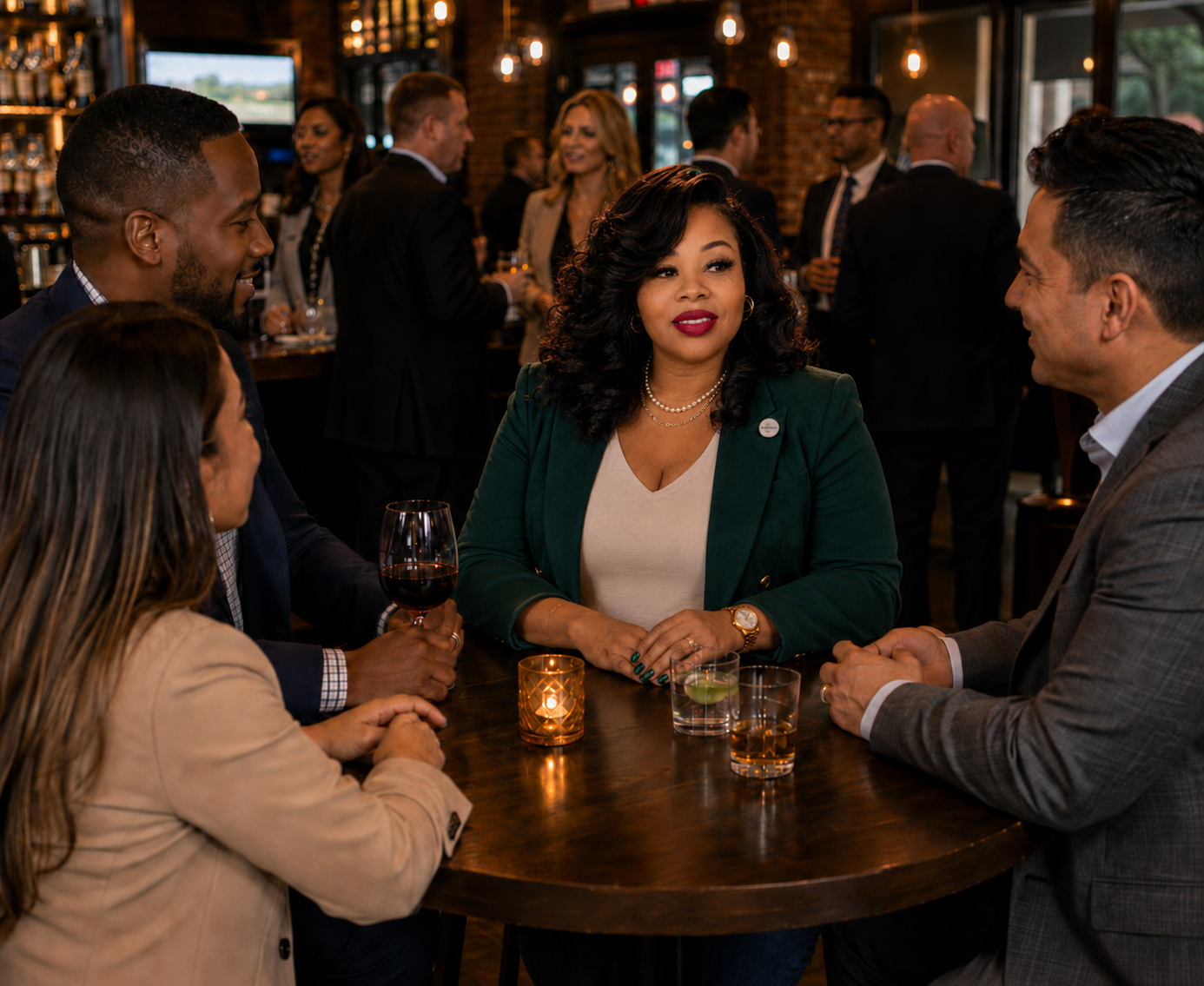
A Community Growth Partner's day doesn't necessarily begin behind a desk. It might begin over coffee with a room full of entrepreneurs. Another day starts from home with a Zoom conversation. There could be lunch with a business owner, an afternoon introduction, an evening mixer or a Saturday community celebration. And occasionally, an unexpected Sunday brunch becomes the setting for a conversation nobody could have planned.
This isn't about working every hour of every day. It's about recognizing something we've known all along: opportunity doesn't keep office hours.
Some people are built for the room.
There are professionals who naturally remember names. They introduce people. They listen carefully. They know what's happening around town, and they notice when one person's need connects with another person's expertise.
They walk into a room and don't simply ask, “What can I get from this?” They wonder, “Who should know each other?” That ability has always had value. It simply hasn't always had a clear professional identity. We call it Community Growth Partner.
Relationship work is real work.
For years, relationship-building has often been treated as an extra responsibility attached to another title. A business owner networks. A salesperson attends a chamber event. A marketing professional represents the company at a luncheon. A business-development professional makes introductions.
The work exists.
The rooms exist.
The relationships exist.
So we asked a different question: what happens when community relationship-building becomes the work itself? That's where Community Growth Partner begins.
Human intelligence in an AI-powered world
Artificial intelligence can analyze information faster than any person. It can organize notes, identify patterns, prepare research, automate repetitive tasks and help professionals make better use of enormous amounts of information. We should use it.
But there is another form of intelligence happening when someone walks into a room.
Who seems excited about a new project?
Who mentioned they're struggling with something?
Who has been trying to meet someone in a particular industry?
Which two people haven't met—but should?
What changed since the last conversation?
Technology can help us capture and connect those signals. Human beings create them. That's relationship intelligence. And as technology handles more of the work that happens behind screens, the ability to build trust between actual people may become even more meaningful.
A different kind of professional life
Community Growth Partner isn't an escape from work. It's a different way of imagining it. A professional life can contain movement, conversation, curiosity, community, technology, independence and responsibility — and the satisfaction of watching one human connection create an opportunity neither person had before they met.
There will still be calendars. There will still be follow-up. There will absolutely still be administrative work. But the center of the work is different: people are the infrastructure. And for the right person, that can create a life of opportunity that looks very different indeed.
People. Presence. Possibilities.